

 Cinema Portal
 Election Portal
 Share Dhani Portal
 Unicode Page
 English Edition
 Share Training
 PREMIUM
 सुन-चाँदीको भाउ
 विदेशी विनिमयदर
 मिति रुपान्तरण
 पेट्रोलको भाउ
 तरकारी/फलफूल भाउ
 आर्थिक राशिफल
 आजको मौसम
 AQI Page


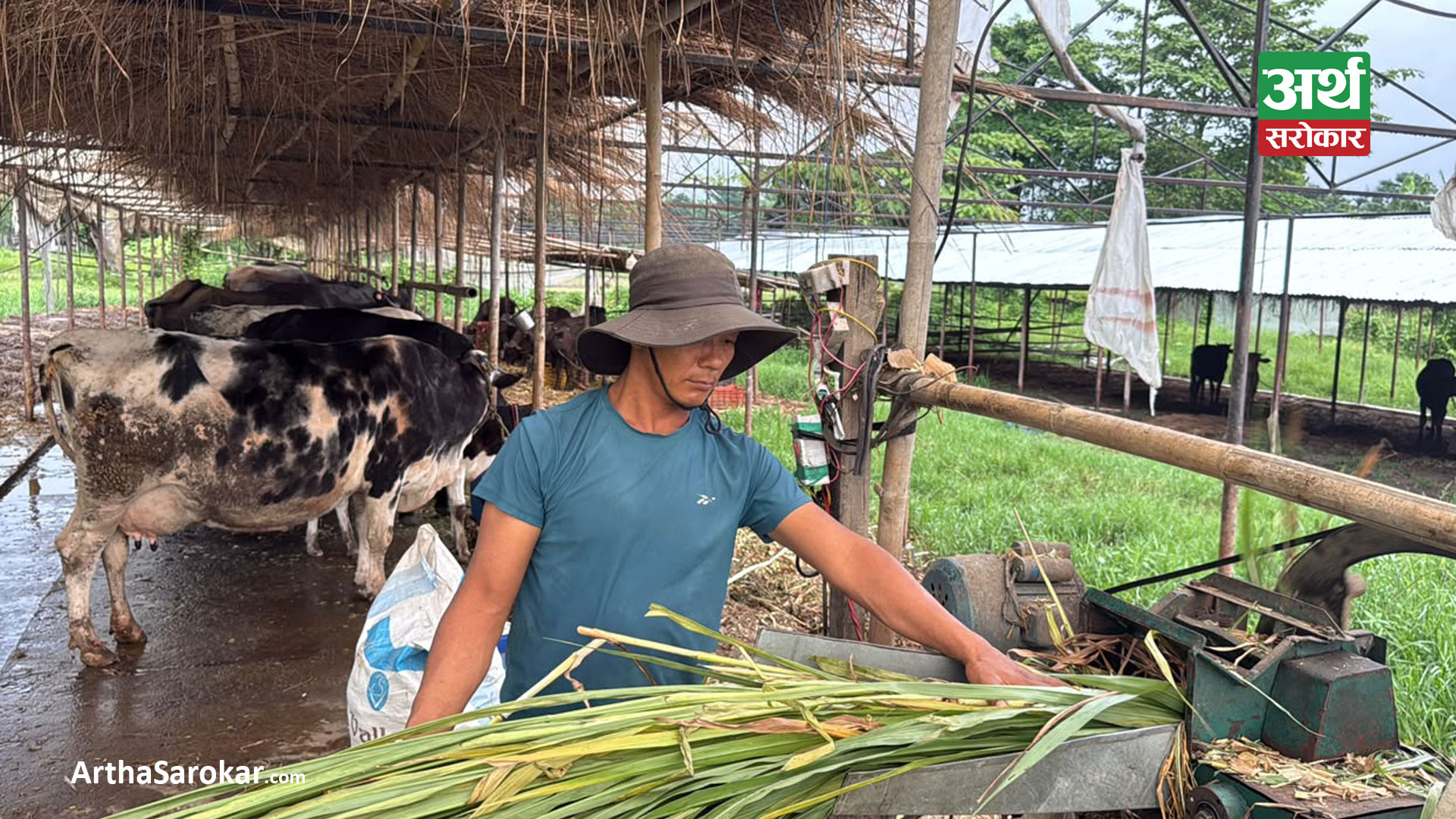
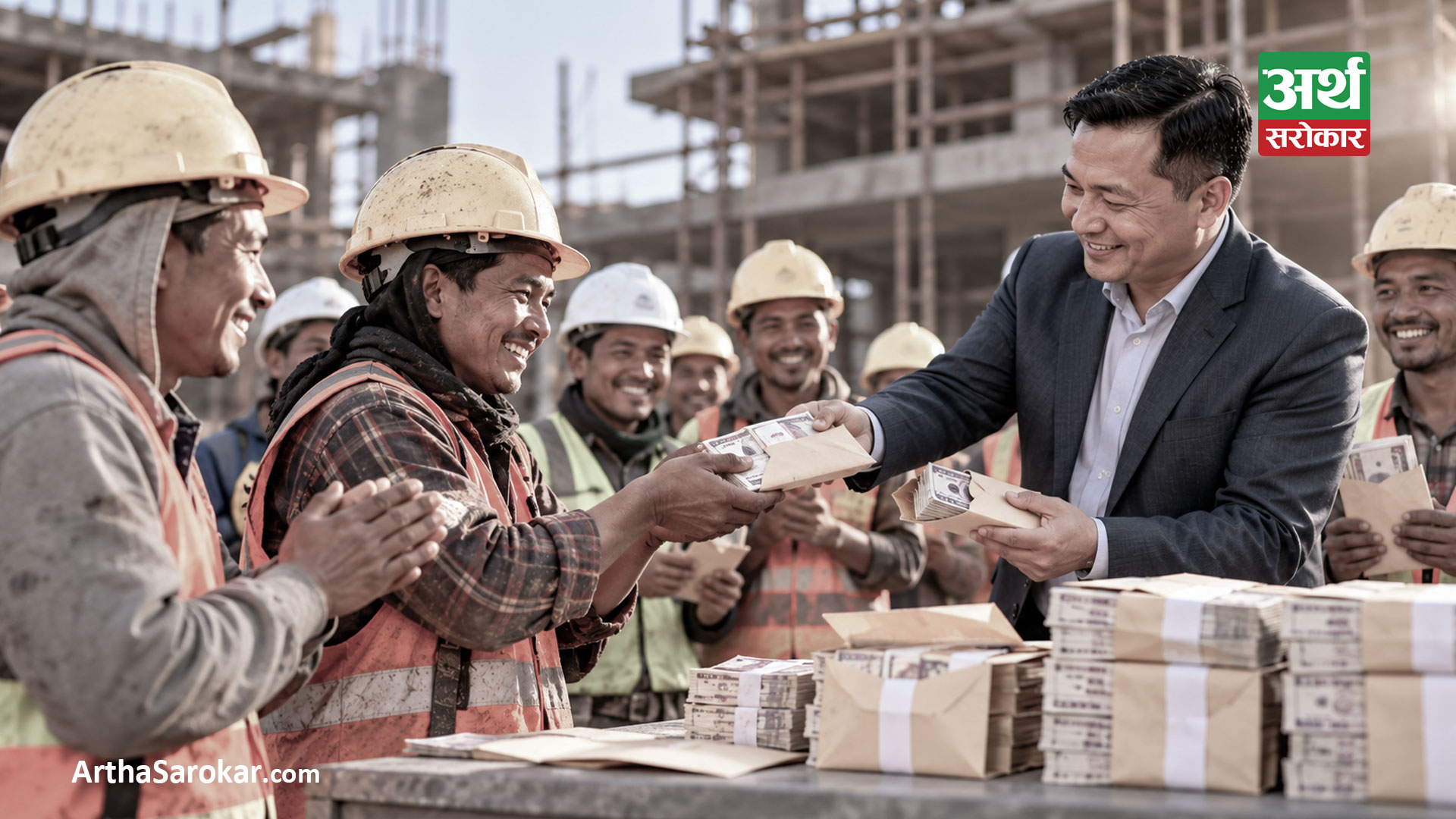
Kathmandu. Most of the youths go abroad for foreign employment. They return after exchanging their youth, age and energy with money. After returning home, they move to well-equipped cities. Even the land in the village is left barren and the cities are concentrated. They buy land, build houses and live in the city. Sandesh Nembang of Chulachuli Rural Municipality-1, Chaubise in Ilam district is one such youth who has invested the money earned abroad in the productive sector.
After living in South Korea for five years, he has invested his money in agriculture and livestock business. He registered ‘Sambang Agro Farm’ in 2076 BS and started agriculture and livestock business. He has been involved in agriculture and livestock farming in 17 bighas of land in his village. He said that he has been doing agriculture and animal husbandry business by renting his own two bigha land and 15 bigha land using the skills of agricultural technology he saw in Korea.
He earns Rs 70 lakh annually from the business. “I have been involved in agriculture and livestock business for the past eight years. I have been earning up to Rs 70 lakh annually from both the businesses,” he said. If you can do the hardships abroad on your own soil, then you can get good income from agriculture and animal husbandry. ‘
Currently, he has 17 buffaloes and seven cows in his farm. Among them, 11 are Maa Laina buffaloes and four Laina cows. He said that four mother buffaloes and three cows are calculated. He sells 120 to 120 liters of milk daily. The milk produced by him is sold to the local Annapurna Agriculture Cooperative and Nepal Multipurpose Cooperative.
The price of milk varies depending on the fat. Cow milk is sold at Rs 65 per litre while buffalo milk is sold at Rs 90 per litre. “The milk produced by the city is purchased on the basis of fat. Cow milk is sold at Rs 65 per litre as it is low in fat and Rs 90 per litre as it is high in buffalo milk,” he said. ‘
He has also started preparations for meat production. He has started buffalo rearing for meat production. He also has a dozen small buffaloes on his farm. He has also planted modern grass of Super Napier breed in five bighas of land for animal husbandry. According to him, the cow dung manure produced from cow and buffalo rearing is used for agriculture and hence there is double benefit.
He has cultivated vegetables in 10 bigha of land. He has cultivated tomatoes, bitter gourd, beans, cucumber, eggplant, chillies and other vegetables. The vegetables produced by him are consumed in Damak of Jhapa. Traders buy from farms.
He has been earning a lot of money from agriculture and livestock. He has not only become self-employed by investing the money he earned in Korea in agriculture and livestock sector but has also provided employment to five youths. They are paid Rs 20,000 per month, including food and lodging, he added. “I myself work in agriculture and livestock business and my wife has also been supporting me in my work,” he said. ‘
Nembang said that his farm has been doing business of seven lakh rupees every month. According to Nembang, he has started agriculture and livestock business in the village itself to give the message that the money earned from abroad can be invested in the village itself. “I had earned enough to stay in the city, but I had to live in Korea. I had enough to eat,” said Nembang, adding, “But I started a business in the village to set an example that I can become self-employed by investing the money I earn from abroad.” ‘
He had gone to South Korea in 2070 BS under the EPS system and returned home in 2075 BS. After returning home, he started commercial agriculture and animal husbandry in 2076 BS. His business, which started with an investment of Rs 25 lakh, has now reached crores of rupees. He said that if he could become a businessman in his own place and do agricultural work, he could earn better income at home than in foreign countries.
Government support for business promotion
He also has the support of the federal and state governments for the promotion of agriculture and livestock business. In the fiscal year 2077/78 BS, Agriculture Knowledge Centre, Ilam had provided Rs 400,000 for the management of the tunnel under the Vegetable Farming Promotion Programme.
Likewise, in the fiscal year 2079/80, Rs 800,000 was provided from the Prime Minister Agriculture Modernization Project with 50 percent share under the Vegetable Pocket Programme. He said that both the grants have helped to promote the business. He complained that he has not received any help from any agency since then. “In the beginning, I got good support from Agriculture Knowledge Centre and Prime Minister Modernization Project. It helped a lot in promoting the business,” he said, “But since then there has been no help from any agency.” The state should encourage the youths involved in entrepreneurship. ‘
He said that there is a need to ensure that all state support programs reach the real farmers. “It is necessary for the state to support the youths who want to do business in the country on the basis of business plan,” he said, adding that the farmers are also suffering due to the practice of running state programs on the basis of access. ‘
Market Easy, Price Volatility Problem
He said that the market is not a problem for agriculture and livestock business, but price volatility is the main problem. According to him, farmers are facing problems as traders can come to the farm to sell the produced. “There is no problem for the sale of our livestock and agricultural products. Traders come to the farm and buy it,” he said, “But sometimes we have to incur losses as the price of major products falls.” He said that the reason for this is the production imported from India. According to him, farmers here would get better price if the import of agriculture and livestock products from India was banned.
“Our products are not getting good price as agriculture and livestock products are imported from India at a lower price,” he said, adding, “If we stop the import of agriculture and livestock from India for a single day, we will get good price for the produce.” For this, the government needs to make policy reforms. He also stressed that the state should formulate a policy to stop the youths going abroad in recent times and to spread it within the country.
Chulachuli Rural Municipality Chair Rajendra Kerung said the rural municipality has brought the policy and programme and the budget giving first priority to the agriculture sector. He said that in the coming year also, in partnership with the Agriculture Development Department, the distribution of machinery tools, animal promotion pocket program, vegetable pocket program, distribution of materials and distribution of seeds would be conducted in partnership with the Agriculture Development Department. “We have been prioritizing agriculture sector since the past,” Kerung said, adding, “We will run various programmes to encourage farmers next year as well.” We will give first priority to commercial farmers. ‘







प्रतिक्रिया दिनुहोस्