





 Cinema Portal
 Election Portal
 Share Dhani Portal
 Unicode Page
 English Edition
 Share Training
 PREMIUM
 सुन-चाँदीको भाउ
 विदेशी विनिमयदर
 मिति रुपान्तरण
 पेट्रोलको भाउ
 तरकारी/फलफूल भाउ
 आर्थिक राशिफल
 आजको मौसम
 AQI Page



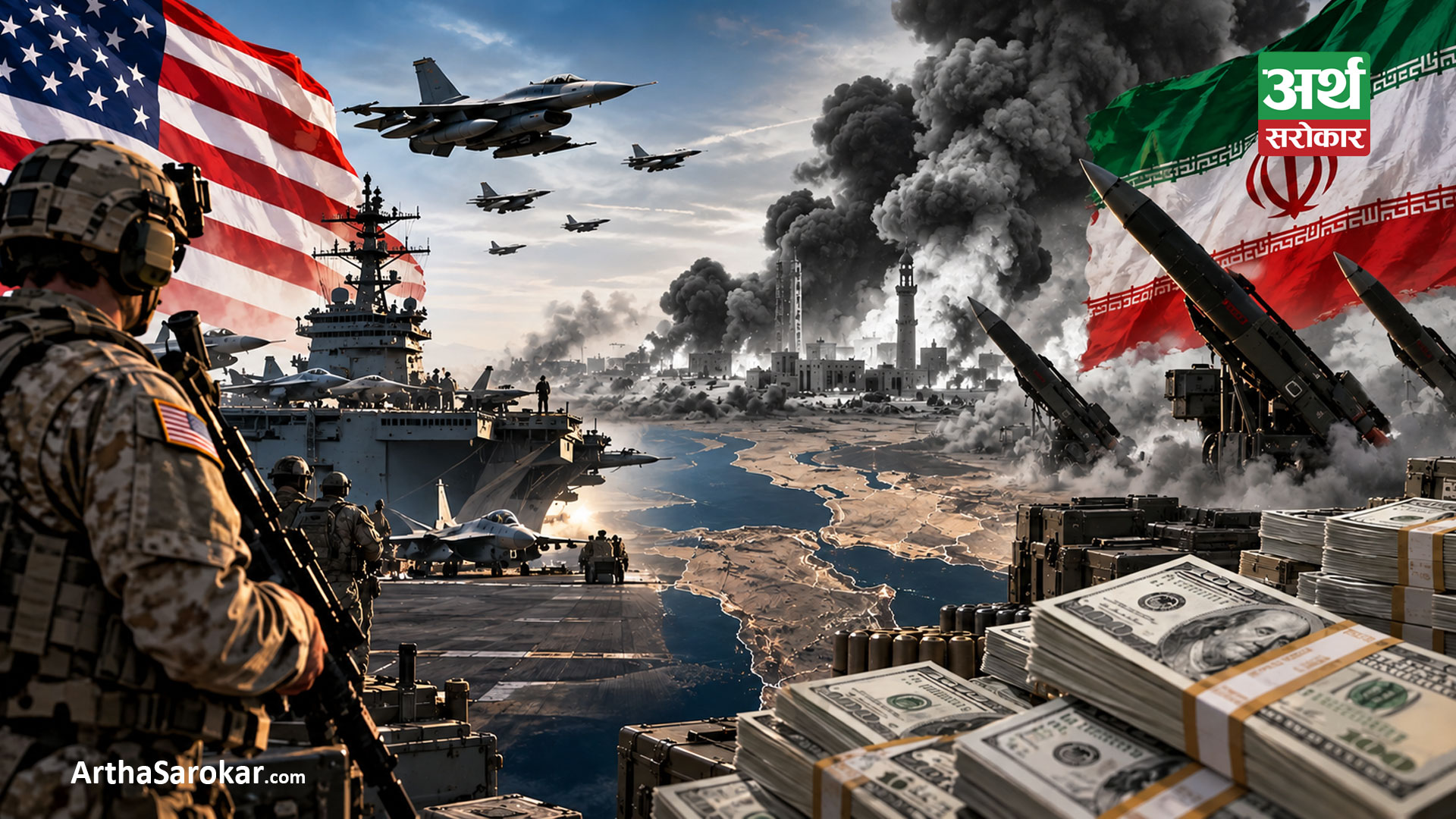
KATHMANDU: U. S. military spending on the ongoing war with Iran has increased to $43.6 billion. According to the latest estimates provided to U. S. lawmakers by U. S. Central Command, U. S. military spending related to the war reached that amount as of Sept. 3.
The economic burden of the war has been steadily increasing since the U. S. and Israel began military action against Iran on Feb. 28. The latest estimates show that U. S. military spending has increased significantly in recent weeks.
Earlier, the US Congressional Budget Office had estimated that $38 billion had been spent on the Iran war as of August 1. The office also said that if the war continues to intensify, it could cost about $3 billion or more per month.
$28.1 billion spent on weapons alone
According to the latest data, the largest share of the total expenditure of the US military has been on weapons and missiles. The cost of weapons alone has reached $ 28.10 billion.
As of August 1, the previous estimate said that the cost of weapons was $ 21.7 billion. In comparison, the cost of weapons increased by $ 6.4 billion in the previous estimate.
This shows that the US military has been using large quantities of expensive missiles and other military equipment during the war.
Missile Defense System Pressure
According to the latest data, defensive missiles are one of the most widely used weapons by the US military. In particular, the demand for Patriot and THAAD missiles, which are used to intercept enemy missiles, has increased.
U. S. officials have said that the war has also put pressure on U. S. missile stockpiles. In Europe, U. S. and North Atlantic Treaty Organization officials have said the lack of missile defense systems is “very serious.”
Saudi Arabia is also depleting its stockpile of such defensive missiles and is seeking more help from regional and Western allies, the report said.
Huge expenditure on war
The one-page report, provided by the US military to lawmakers, includes operating expenses for warships, aircraft and military bases being used during the war.
Similarly, the cost of military equipment damaged or destroyed during the war and the cost of treatment of the injured soldiers have also been included in the total estimate.
However, the full cost of Iran’s damage to US military bases in the Middle East is not included in the latest estimates.
Damage to U. S. military bases in the Middle East
According to the latest report from the Department of Defense’s inspector general, Iran’s missile and drone attacks have damaged or destroyed hundreds of buildings and other structures at US military bases in the Middle East.
US military installations in Kuwait, Bahrain, Qatar, the United Arab Emirates, Saudi Arabia, Iraq, Oman and Jordan have been damaged, the report said.
The full economic cost of damage to these structures is not included in the latest war cost estimate of $43.6 billion.
Number of U. S. troops killed and wounded
According to data from the U. S. Department of Defense, 18 U. S. soldiers have been killed and more than 830 wounded during the war. This shows that along with the economic cost of the war, the loss of life is also significant.
Demand for additional budget
As the cost of the war increases, the US government has to provide additional funds for the military budget and the conduct of the war. The US administration has requested the Congress for an additional budget package of $ 95 billion. It is said that it plans to raise money for the Iran war and other defense priorities.
Meanwhile, the US administration has proposed a $1.5 trillion military budget for the coming year.
The economic impact of the war outside the U. S.
The impact of the Iran war is not limited to US military spending. The war has also affected oil prices, international markets, and regional trade.
The U. S. Congressional Budget Office (CVA) has said that disruptions to energy and trade shipments, particularly through the Strait of Hormuz and the Red Sea, could put more pressure on the global economy.
The war is expected to affect U. S. inflation in the early months of next year, according to the report.
The U. S. Congressional Budget Office estimates that if the intensity of the war continues, about $3 billion or more could be spent each month. Therefore, the U. S. economic burden is likely to increase further depending on the duration of the war and the intensity of military action.
The $43.6 billion in spending as of Sept. 3 shows the enormous financial burden on the U. S. government in just a few months since the military conflict began on Feb. 28.










प्रतिक्रिया दिनुहोस्