





 Cinema Portal
 Election Portal
 Share Dhani Portal
 Unicode Page
 English Edition
 Share Training
 PREMIUM
 सुन-चाँदीको भाउ
 विदेशी विनिमयदर
 मिति रुपान्तरण
 पेट्रोलको भाउ
 तरकारी/फलफूल भाउ
 आर्थिक राशिफल
 आजको मौसम
 AQI Page




. The upper circuit and the lower circuit are two important systems of the stock market. This helps to prevent excessive and unnatural price fluctuations in the market. The concept is simple. To limit the fluctuations in the price of shares in the market and to help stabilize the market by providing the stock with ‘cooling period’. For this, the minimum and maximum limit of the price that any stock can have in a day is determined. As a result, each stock in the market fluctuates within a limited range, this is called a circuit breaker or circuit limit.
It is considered to be an important tool to protect investors from large fluctuations in the fear of overbuying and selling due to sudden news or other new events in the market.
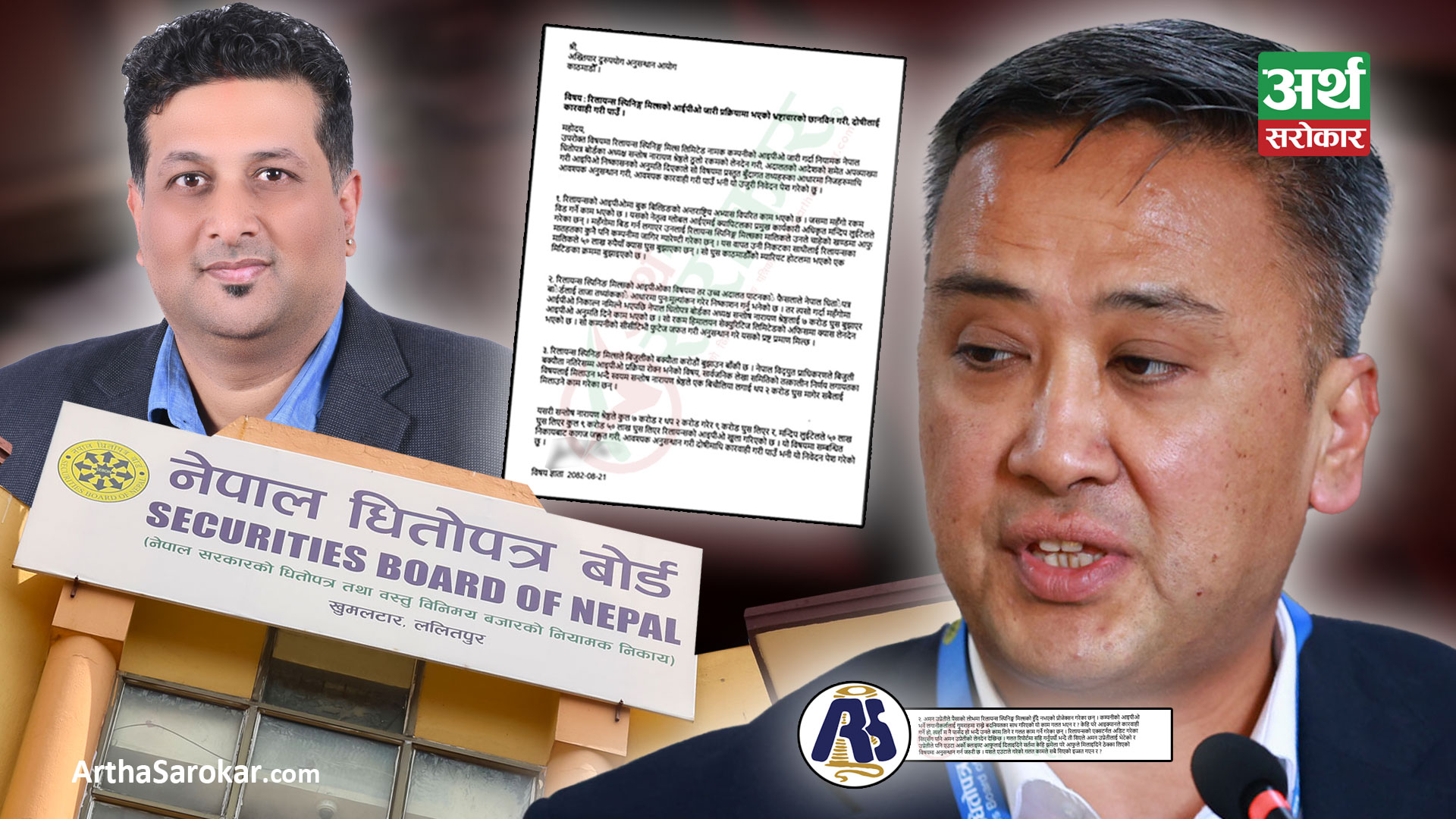
The new circuit breaker rule introduced recently in Nepal seems to be more harmful to than to the interests of the investors. In a small market like Nepal, it seems very unfair to have 15% upper and lower circuits.
Setting a limit of 15% in a single day can cause a single stock to fluctuate up to 30%, which is extremely risky. While the circuit limits of 5% and 8% introduced for the NEPSE index seem natural, the other rules seem to have been brought in without adequate consideration, deliberation and market study/research. The purpose of the circuit limit is to prevent abnormal fluctuations and to provide protection especially to small investors, but now it seems to be the opposite.
An example of this is that some time ago, in the ‘pre-open’ session on Nepse, any stock could open up or down 5%. It was said that it increased the volatility in the market and later it was reduced to 2%. Neither nor Nepse has a clear answer that if 5% had increased movement then, then 5% would not move again now. Rather, it would have been positive for the market if the tick size had been reduced from 10 paise to 1 paisa to make the market liquid. But here it seems that various rules have been implemented without adequate study, going beyond the interests of the market and investors. Along with the new circuit rules, there was also a provision to keep ‘after market order’, but it has not been implemented yet. There is a tendency to implement unnecessary rules immediately but not to implement the rules that are beneficial to the market.
To understand why the current circuit level of is wrong, let’s look at the example of neighboring India. In India, not all stocks have the same type of circuit limit, because the liquidity, volatility and impact of each stock on the index is different. Keeping these things in mind, different circuit limits have been assigned by classifying the shares. There is a circuit limit from 2% to 20%.
Also, if a stock has a derivative product, then a fixed circuit limit is not placed on such a stock, but a dynamic price band of 10% is applied for 15 minutes, which provides a cooling period for the share price. In some stocks, the daily circuit limit is changed. In India, there is a limit of 2% in penny stocks, 5% in small caps with high volatility, 10% in mid-cap and 20% in high-traded large caps. If a stock is monitored by a regulator (such as SEBI) or an exchange, then a separate circuit limit is prescribed for it.
If there seems to be an abnormal price fluctuation in the market or when there is a suspicion of manipulation, the circuit limit of such shares is also changed. More importantly, if a stock has contributed 3% to the index and there is an activity to manipulate the market by using it more, then the contribution of such stock is reduced from 3%, i. e., modified. In Nepal, shares like BBC, whose only limited shares are traded in the market but also by calculating the number of untraded shares have been made to the NEPSE index, which is completely wrong. Despite being aware of this, the regulatory body has not taken any effective steps to control it.
Circuit level should actually be for the safety of the investors, but in Nepal, it seems to have further promoted manipulation. The regulator should give priority to the interest of the investors and for that the study committee should be formed and such rules should be brought. But here, there is a tendency to form a committee and study only after there is a problem in the market. If the market is to be stabilized and the interest of the investors is to be ensured, then the current role of the regulator needs to be changed from the root.








प्रतिक्रिया दिनुहोस्