



 Cinema Portal
 Election Portal
 Share Dhani Portal
 Unicode Page
 English Edition
 Share Training
 PREMIUM
 सुन-चाँदीको भाउ
 विदेशी विनिमयदर
 मिति रुपान्तरण
 पेट्रोलको भाउ
 तरकारी/फलफूल भाउ
 आर्थिक राशिफल
 आजको मौसम
 AQI Page



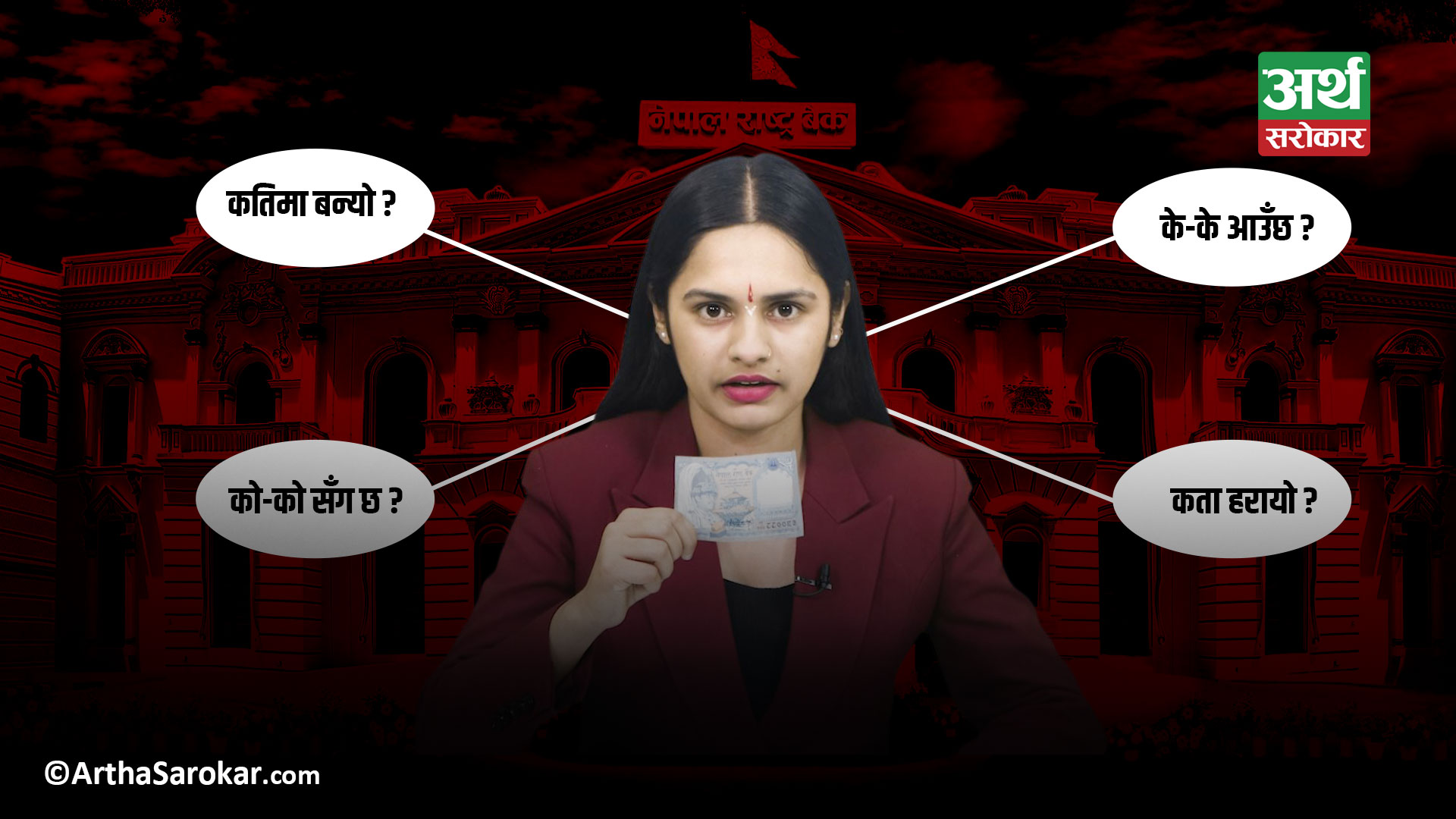
. Where did one rupee disappear? This question may seem simple, but it hides the larger story of the change of time, economic conditions and our lifestyle. A one-rupee note and a coin are those items that cost more than one rupee to make. That is why the Nepal Rashtra Bank has stopped making one rupee note for a long time.
paper notes have been issued in Nepal after the establishment of Nepal Rastra Bank . In particular, the 1 rupee note in Nepal in the 1960s 2017 – 2018) is considered to have been in use since {{}. Earlier, the use of coins was high in Nepal. Therefore, the 1 rupee note has been officially issued in Nepal since the 1960s by the Nepal Rastra Bank .
There was a time when even a rupee had a lot of value. The small coin brought a smile to the children’s faces, gave them the joy of sharing food with friends and created small fun moments of the day. The excitement of running to the shop with a one-rupee coin in hand, the love and sweet words of the sister in the shop, and the satisfaction of getting the chocolate or noodles of one’s choice, all these things are very happy even today.
There was a time when the mere sight of a small shop on the way to school would increase the value of a rupee. Onerupee could buy four lacto chocolates, noodles worth one rupee, biscuits, etc., in my sister’s shop. The shopkeeper would also take the small coin with respect and ask and “What do you want?” Remembering the simplicity and contentment of those times makes me happy.
But slowly times changed. Prices began to rise in the market. As a result, the goods which were earlier available for one rupee have become more expensive by becoming two rupees and five rupees today. In the current situation, even if you have a one-rupee coin in hand, you can’t buy much. Some shops have stopped charging a single rupee because its practical use has diminished. Earlier, if you get one rupee on the road, you used to think that you got the world, but today tomorrow even if you see 1 rupee, you will walk around ignoring it.
Now let’s talk about the city
In cities, it seems like a rupee is missing. The price of bus fare, tea, snacks or any other daily necessity has increased a lot. It has become like a rupee is only used as a separate amount. Occasionally is seen only in banks or shops, that too without much use, but in the countryside, the existence of a rupee is still to some extent. In some shops or fairs, sometimes small sweets are available for one rupee. But even that is disappearing. We don’t buy it just for one rupee, even if it costs one rupee, we buy it for more than 5 rupees. Because we feel ashamed.
It may be sad to hear , but today’s new generation does not understand the real value of a rupee, because the importance of that money in their daily life has diminished. The question ‘where did a rupee go?’ not only makes us think about money, it also makes us think about our childhood, our culture and our level of satisfaction. In the past, I used to be happy with small things, but now I don’t get much satisfaction even when I spend a lot of money. This shows that happiness does not depend only on money, but on our thinking and lifestyle.
The depreciating price of one rupee also shows the impact of inflation. When a small amount of money cannot buy something, it is also a change in the economy. It has also inspired us to think about how to save, spend, and plan financially.
In the age of digital payments, mobile banking, and online transactions, the use of small coins is declining. People have become more reliant on digital means than cash. This is also obscuring small amounts like one rupee. But even in the midst of all these changes, the sentimental value of a rupee never fades. It lives forever in our memory, in our experience, and in the story of our childhood. When we remember the old days, that small coin of one rupee comes as a part of the big memory.
Therefore, the answer to the question ‘where did one rupee disappear’ cannot be found only by searching in the market. It is hidden in our minds, in our memories, and in our experience. Although its physical value has diminished over time, its sentimental value will always remain high. The coin that used to buy happiness, today no one probably has the same coin, now everything is fast, big notes and digital money have made life easier, but the belongingness and happiness hidden in that small coin seems to have disappeared somewhere. Over time, we have changed, our desires have increased, our needs have increased, but the habit of seeking that small happiness of the heart has been lost somewhere.
But, even if the value of a rupee decreases, the memories and feelings it carries have never been lost in people’s minds. Sometimes, when we think of those old days, we were truly rich when we found great happiness in small things.
Let’s understand the importance of a rupee
Now listen, if a person’s vehicle fare is Rs 33, then that person also pays Rs 35, according to the rules, Rs 2 should be refunded. However, in practice, in most cases, the 2 rupees are not returned due to lack of small coins, a rush, or a “let’s leave” mindset. Sometimes, passengers don’t even ask for it themselves. Why they don’t ask for it is a matter of course you know.
Even 1 rupee is money, think about it, if you have to give 1000 rupees to a person, but you have only 9990 rupees in your mobile banking, that lack of 1 rupee will stop your whole work, what do you do now? The value of one rupee will definitely be worth you at that time. Every single rupee is collected and becomes a million, if everyone is aware of their small amount, then the problem of such ‘lost money’ can be reduced. It’s not just about 1 rupee, it’s also about our behavior and thinking. with video:
https://www. youtube. com/watch? v=e3245dm20R4






प्रतिक्रिया दिनुहोस्