





 Cinema Portal
 Election Portal
 Share Dhani Portal
 Unicode Page
 English Edition
 Share Training
 PREMIUM
 सुन-चाँदीको भाउ
 विदेशी विनिमयदर
 मिति रुपान्तरण
 पेट्रोलको भाउ
 तरकारी/फलफूल भाउ
 आर्थिक राशिफल
 आजको मौसम
 AQI Page


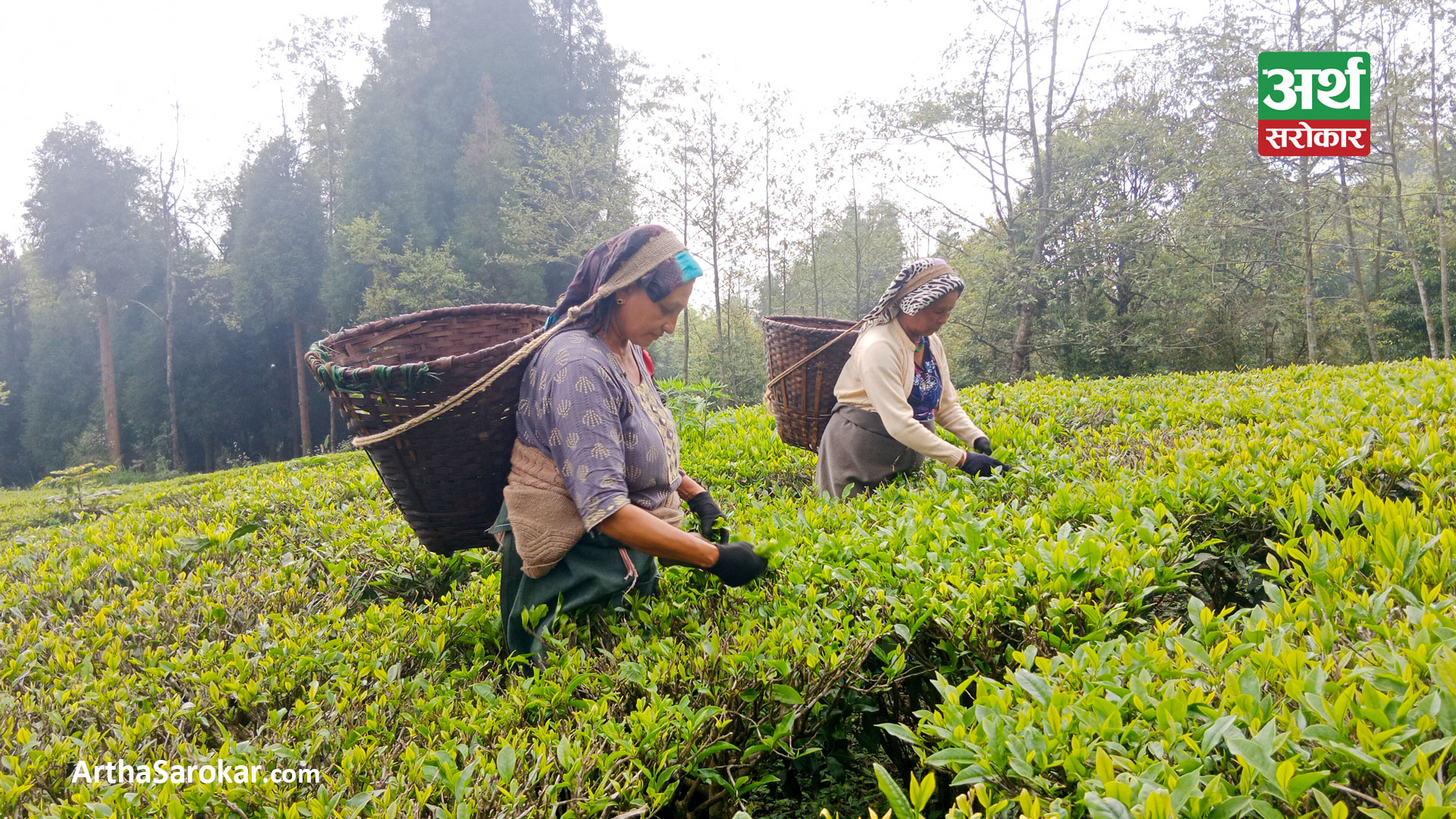
Kathmandu. KATHMANDU: Tea factories in Suryodaya area of Ilam district have decided to shut down after India imposed a ban on the import of Nepali tea. Suryodaya Orthodox Tea Producers Association Nepal (RSPA) has announced to shut down its industries from June 15.
Over 300,000 kg Nepali tea supplied to the Indian market has not been tested for its quality test while over 7 lakh kg tea is out of stock at the factory, he said. Dilli Shrestha, president of the association, said that the industry has not been able to operate as the storage capacity is full.
“We have processed the green leaves purchased from the farmers to make readymade tea, but it has not been sold in the market. The storage space has also been filled. Shrestha said, “We cannot stop the payment to the farmers, so there is no other option but to shut down the industries.” ’
KATHMANDU: India has implemented Standard Operating Procedures (SOP) on tea imported from Nepal from May 1, 2026. As per the provision, the tea of each vehicle should be tested separately, it will take more than 20 days for the report to be received and the sale will not be allowed until the results are received. If the test fails, the tea will have to be destroyed or brought back.
“The road to the tea produced in the market has been blocked. Industrialist Gopal Kattel said, “We are not in a position to operate the tea industry after India halted Nepali tea industry by creating various technical hurdles.” He urged the federal government to take effective initiatives to address the problem of export of Nepali tea. “The government should take timely diplomatic initiatives to facilitate exports. Tea market worth billions of rupees is at risk of losing if initiatives are not taken to remove obstruction,” Kattel said. ’
Thousands of farmers will be affected due to the closure of the industry. According to the association, there are 2,995 tea farmers in Suryodaya municipality. Tea is cultivated in 33,655 ropanis of land and produces 20 million kilograms of green leaves annually. “If the industry is closed, the income will stop, how will we run the family? We lose our livelihood. Rajan Bhattarai, a farmer, said, “Our green leaves are not sold after the industry is closed.” Now the worry of how to survive has increased. ’
Suryodaya Municipality, which has more than 65 tea industries, has urged the Ministry of Foreign Affairs to immediately take high-level diplomatic initiative to clear Indian hurdle on the sale of tea to Nepal. The Municipality said that the Indian Tea Board had started collecting samples of each sack from the importers’ godown at the Nepali tea consignment which reached Kolkata, India.
“There is a risk that the quality of Nepali tea will be degraded and damaged due to the tedious process of being stored in the Indian godowns. Acting Mayor of Suryodaya Municipality Durga Kumar Baral said, “The government of Nepal should take high-level diplomatic initiative to remove the obstruction from India.” ’
According to Nabin Koirala of the National Tea and Coffee Development Board, Nepal exports more than 70 lakh kilograms of orthodox tea every year. More than 90 percent of which goes to the Indian market. Nepal exports orthodox tea worth Rs 4.25 billion annually and is mainly produced in Ilam, Panchthar and Dhankuta.










प्रतिक्रिया दिनुहोस्