Kathmandu. Various measures taken by the government for the revival and upliftment of the economy have started showing positive results. In the 100 days of the formation of the government led by the Rastriya Swatantra Party, which was approved by the people’s mandate, there has been an improvement in revenue collection and the expected change in the overall nature of the economy. The confidence in the private sector, the expansion of investment and the trust of donors have also increased.
The government with two-thirds majority has created an investment-friendly environment. According to the demand of the private sector, the process of repealing more than a dozen old and impractical laws has been initiated. Reforms in tax laws, such as the abolition of impractical and redundant offices, have led to a rise in confidence.
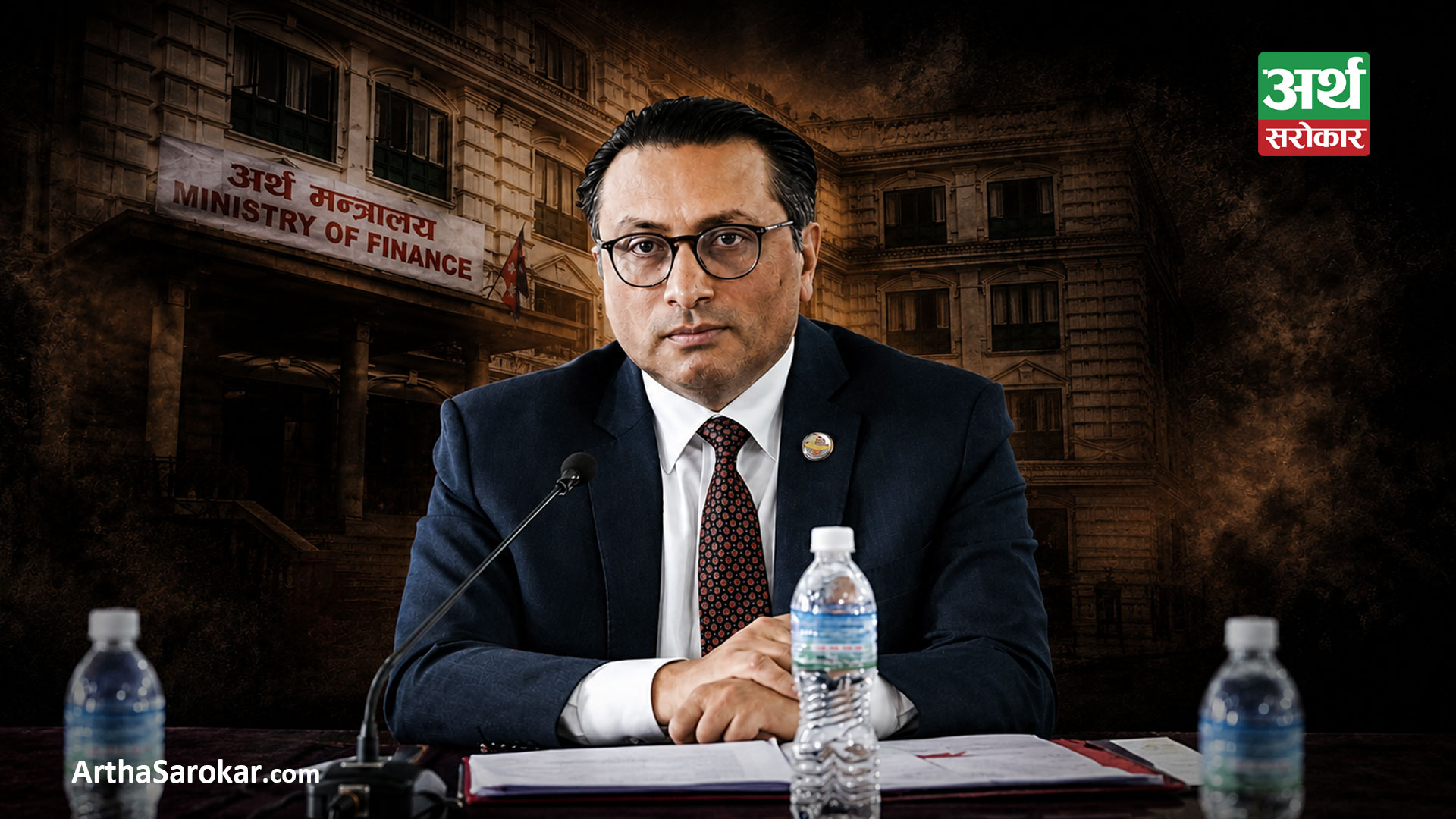
Finance Minister Dr. Swarnim Wagle pledged to take concrete steps for the country’s economic revival and good governance. He decided to start the process of repealing 15 outdated laws that troubled the private sector and the general public.
According to him, the decision was taken on the basis of high-level economic reform suggestions report and recommendations of various business associations.
The Ministry of Finance has effectively carried out its activities on the basis of the guidelines expressed on the day of the office.
The dream of a $100 trillion economy
The most important issue that the present government led by Prime Minister Walendra Shah has emphasized is the economy worth Rs 100 trillion. Finance Minister Dr. Wagle has also given priority. The government has forwarded its activities with the belief that the size of the economy should be significantly increased for the economic progress of the country. This issue was also mentioned in the manifesto presented by the Rastriya Swatantra Party in the election to the House of Representatives held on February 4.
The Finance Minister has been reiterating time and again that works have been started in mission mode to increase the size of the economy through energy production, tourism, ICT, agriculture, infrastructure and institutional reforms.
The budget for the coming fiscal year has also been focused accordingly.
The manifesto of the Rastriya Swatantra Party had announced an ambitious plan to increase the size of Nepal’s economy to more than $ 100 billion in the next 5 to 7 years.
The government has expressed this policy in the budget presented on May 29.
The pledges have set a target of achieving economic growth of at least 7 percent annually at constant prices and bringing the per capita income of Nepalese to $ 3,
000 within 5 to 7 years. According to the World Bank criteria, Nepal is one of the low-income countries. In the next 5 years, the goal is to reach the level of a respectable middle-income country.
The government has given high priority to good governance and service delivery.
The concept of ‘online, not line’ has been implemented in government services. The commitment to implement meritocracy and build a non-party state mechanism has been put into practice. Dozens of acts and regulations that were considered obstacles to economic progress have been repealed at once and an environment has been created for the private sector to invest.
The government has set five priorities in the budget for the coming fiscal year. Good governance is the first priority of the government. Second, the revival of the economy. Third, internal and external connectivity in the country. The fourth priority is social investment and the fifth is the expansion of soft power through tourism, culture and history. This has been specified in the budget. The government believes that the country would pave the way for economic progress if the country is moving ahead honestly as political stability has been achieved.
The short-term, medium-term and long-term effects of the war in the Middle East on remittances, petroleum prices, and chemical fertilizers are analyzed and addressed. Saturday and Sunday have been declared public holidays for the same purpose. Domestic economic stagnation, unemployment and sluggish economic growth have been addressed. The situation in which the private sector has not been able to take loan despite the ‘drought’ seen in revenue collection and expenditure and the increase in deposits in the banks has been gradually taken forward in the direction of improvement.
Citizen participation in budget making
The government launched a portal to collect suggestions this time with the aim of directly involving the citizens in the budget making. The Office of the Prime Minister and Council of Ministers has launched the suggestion collection portal to ensure the direct participation of the general public in the policy, programme and budget formulation process for the coming fiscal year.
This
digital platform has been launched with the objective of making the governance more transparent and people-oriented by incorporating the real needs and fundamental expectations of the people in the formulation of the government’s annual policies and programs and budget.
Citizens, subject experts and policy makers residing in the country and abroad shared their important opinions and suggestions regarding budget formulation and development priorities through this portal.
The portal established a new practice of good governance by bridging the distance between the citizens and the state, and the suggestions received were seriously reviewed at the administrative level and implemented in a policy manner.
Finance Minister’s ‘Mission’ mode
Finance Minister Dr. Wagle has put forward the ‘mission mode’ work in the sense of giving top priority. The working style of the state has been changed to achieve the economic goals within the stipulated time frame, keeping results at the center rather than speeches. The traditional trend has been broken. Digital tracking, live monitoring, and drastic legal reforms have been put in place. Its main feature is result-oriented working style.
is intended to produce results, not to rhetoric or superficial planning. Time limits and performance indexes have been used. Arrangements have been made to directly track the progress of projects and policy implementation through digital monitoring. Policy hurdles have been removed to boost the morale of the private sector and attract investment through legal and institutional reforms.
Institutional responsibility has been established. Cost control and quality are maintained. The system of reducing unnecessary administrative expenses, gradually closing down retail schemes and implementing schemes only through open competition has been adopted. The goal is to make the economy based on remittance and import based on production, innovation and entrepreneurship.
According to its impact on the economy and the expectations of the private sector, there is a gradual environment of confidence. Tax cuts and policy easing have been introduced to boost business morale and create stalled demand in the market. Efforts have been made to make the economy dynamic by giving priority to agriculture, energy, infrastructure expansion and digital governance.
Pension Relief
Another important thing that the Ministry of Finance has done in the meantime is the unnecessary hassle that pensioners are receiving. The e-pension verification system has been started by ending the hassle of three and a half lakh pensioners. The system developed by the Office of the Financial Comptroller General has been started. The hassle of renewing the troublesome pension and selecting the bank has ended and the bank commission to be paid by the government has also come down to zero.
Retirees are not required to be physically present and the provision of receiving services from home has been implemented. The burden of bank commission to be paid will be reduced by an average of Rs 150 million annually. Cash flow has become predictable and it has become easier to manage the pressure on the treasury. Human error in manual calculation of pension has been reduced. The trouble of 3,52,816 pensioners (including 44,000 inactive) pensioners under this scheme has ended. This service is available online from home.
Salary for 15 days
Similarly, the government has started providing salaries to federal civil servants every 15 days from April 2
9. This new implementation has been initiated by the Ministry of Finance as a pilot project.
Finance Minister Wagle initiated the process by sending the payment order to the Office of the Treasury and Financial Comptroller General through the computerized government accounting system of the Financial Comptroller General.
The government said that the government has taken such innovative decision to make the market more dynamic and to increase consumption and demand.
has been implemented in the federal civil servants and the government plans to gradually expand it to all government salaried. Half-monthly wage payments are expected to create regular demand in the market, increase the cash flow of small businesses, and spread the distribution of consumption expenses evenly.
This arrangement will have a positive impact on the service business and will also help in the development of the digital economy.
This arrangement will ease the financial management of the employees and qualitatively improve the overall economic activities.
The Inland Revenue Department (IRD) has taken forward more effective work to include the taxpayers making transactions of more than Rs 200 million annually in the Central Invoice Monitoring System.
This has strengthened the revenue system to be transparent, digital and effective. The government is doing the necessary work to automate tax administration, control revenue leakage and provide easy service to taxpayers.
budget to expand the middle class
Finance Minister Wagle presented a budget of Rs 2.
114 trillion for the coming fiscal year with the goal of expanding the middle class and uplifting the weaker sections. Karnali and Sudurpaschim provinces have been given special priority in the budget.
Out of the total allocation, Rs
1,270.58 billion has been allocated for recurrent expenditure, Rs 431.10 billion for capital expenditure and Rs 422.64 billion for financial management.
Of the estimated sources of expenditure for the coming fiscal year, Rs. 1405.31 billion will be less from revenue and Rs. 61.74 billion from foreign grants. To meet the demand, Rs 247.28 billion would be mobilized from foreign loan. The amount of Rs 410 billion, which will be less than the revenue and foreign aid mobilization, will be collected from internal loans.
The Finance Minister believes that the policy reform programs announced in the budget will lead to economic growth of 7 percent.
Similarly, inflation will be limited to 6 percent. Tax rates have been reviewed to give relief to enterprises and expand the middle class to make the overall economy dynamic. The budget has made a provision to double the limit of income tax exemption and pay only one percent tax for individuals up to Rs 10 lakh.
The maximum tax rate on personal income has been reduced by 10 percentage points.
The budget has emphasized on infrastructure expansion. Emphasis has been laid on the development of energy, road infrastructure and policy reforms for sustainable expansion of economy.
In the first 10 months of the current fiscal year, Nepalese who went abroad have sent remittances worth Rs 1.916 trillion.
In the month of April alone, Rs 257.49 billion was remitted. The remittance inflow in US Dollars increased by 33 per cent and reached to reach Rs 13.26 billion in the review period.
Similarly, the total foreign currency reserves stood at Rs 3704.55 billion in mid-April last year.
Such reserves have reached Rs 24.19 billion in US dollars. The current account has surplus of Rs 729.28 billion as of mid-April last year. Similarly, the balance of payment position stands at Rs 863.56 billion.
Fuel facility cuts
As part of the reforms, the Ministry of Finance decided to drastically cut the fuel facilities being provided to government employees and officials.
Finance Minister Dr Wagle had approved the decision to cut fuel facilities to save the economy from fuel crisis.
The decision was taken to maintain austerity in public expenditure due to the huge increase in the price of petroleum products in the international market, decrease in supply and failure to collect revenue as per the target in the current fiscal year.
The Ministry of Finance had amended the provisions related to fuel in point no. 49 of the ‘Work Operation Directive, 2081’ in exercise of the powers given by Sections 20 and 24 of the Economic Procedures and Financial Responsibility Act, 2076.
According to the amendment, secretaries and special class officials who have been receiving 125 liters of fuel have been given only 70 liters.
A total of 100 liters of fuel has been provided to the joint secretary level office-bearers with 50 liters of fuel. However, the fuel facility is available to the ministers and constitutional officials as per the prevailing law.
Government Reforms
Out of the 100 agendas of governance reform of the government, the Ministry of Finance has prepared an action plan related to the financial aspect and assigned the responsibility to the concerned agency÷division.
Point No. 100 of the government’s 100 agendas for governance reform. The budget demanded for strengthening the Central Investigation Bureau of Nepal Police, which was included in the 94 Division, was released.
Finance Minister Dr. According to Wagle, a digital system with QR code has been implemented to make the multi-channel grievance redressal mechanism effective and for grievance redressal and management. During the period, the Five-Year Strategic Plan of the Office of Auditor General, 2082 has been approved and implemented.
Revenue Administration and Customs Facilitation
In the context of disruption in the supply of petroleum products (diesel, petrol, kerosene) due to the tension in West Asia and the price hike in the world market, 50 percent discount was given on customs duty and infrastructure development fee to reduce the burden on the people.
As per point 96 of the 100 agendas related to governance reforms, it was decided to provide 651 motorcycles and 41 four-wheelers to the security agencies.
The officers of 47 offices including Large Taxpayers Office, Medium Level Taxpayers Office and the concerned Treasury and Financial Comptroller Office have been appointed as Excise Duty Officers with responsibilities and jurisdiction as per the Excise Duty Act, 2058.
Economic Diplomacy and Investment Promotion
The Ministry of Finance also effectively pursued intensive economic diplomacy. Efforts have been initiated with the representatives of the private sector and reputed multinational companies to bring in foreign investment in Nepal with the commitment of investment security.
Finance Minister was the keynote speaker at the Ministerial Session on Finance for Development organized by the United Nations Economic and Social Council (ECOS) in New York, USA and at ‘The Nepal Discourse’ organized by Harvard University and Massachusetts Institute of Technology virtually in New York, USA.
Agreement in principle has been given to forward the process of grant-in-aid of 2.85 billion Japanese Yen for the improvement of Tribhuvan International Airport. In the Investment Board Monitoring and Facilitation meeting, necessary suggestions were received to resolve the problems related to forest and environment in the course of implementation of the projects under the Board. KATHMANDU: The report of the Committee on Restructuring of the Nepal Stock Exchange Limited-2082 has been received and implemented.


 Cinema Portal
 Election Portal
 Share Dhani Portal
 Unicode Page
 English Edition
 Share Training
 PREMIUM
 सुन-चाँदीको भाउ
 विदेशी विनिमयदर
 मिति रुपान्तरण
 पेट्रोलको भाउ
 तरकारी/फलफूल भाउ
 आर्थिक राशिफल
 आजको मौसम
 AQI Page











प्रतिक्रिया दिनुहोस्